Slab Leak Repair in Casa Grande, AZ
When pressurized water lines fail beneath your concrete foundation, immediate non-invasive diagnostics protect your home from severe foundation shifts, structural cracks, and runaway water utility costs. Expert slab leak repair Casa Grande AZ homeowners trust.
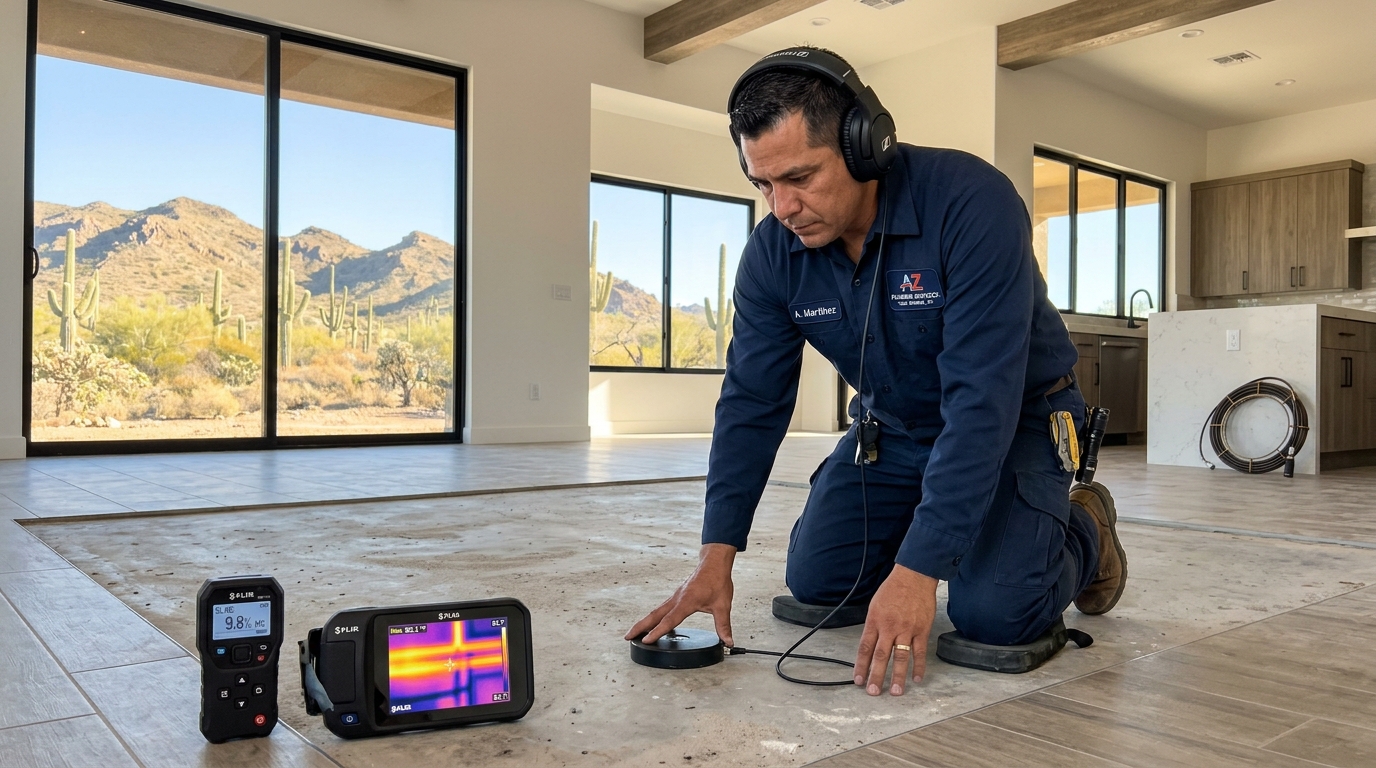
Understanding Under-Slab Leaks in Casa Grande Desert Homes
A slab leak occurs when the pressurized copper or galvanized water supply lines buried beneath or encased within your home's poured concrete foundation slab rupture, crack, or corrode. In Casa Grande, where modern suburban subdivisions across Pinal County are constructed on ground-level concrete slabs without basements, these supply lines bear constant municipal water pressure underground.
When an undetected water leak under slab Casa Grande occurs, thousands of gallons of water can saturate the surrounding desert soil. As pressurized water erodes the subgrade fill or compromises reactive clay seams beneath your floors, moisture migrates upwards through micro-pores in the slab, degrading floor adhesives, warping hardwood, and risking foundation heave.
Resolving an under slab leak repair Casa Grande problem requires specialized technical experience. You need a dedicated slab leak plumber Casa Grande who uses calibrated acoustic ground sensors rather than indiscriminate sledgehammers to locate and solve the issue cleanly.
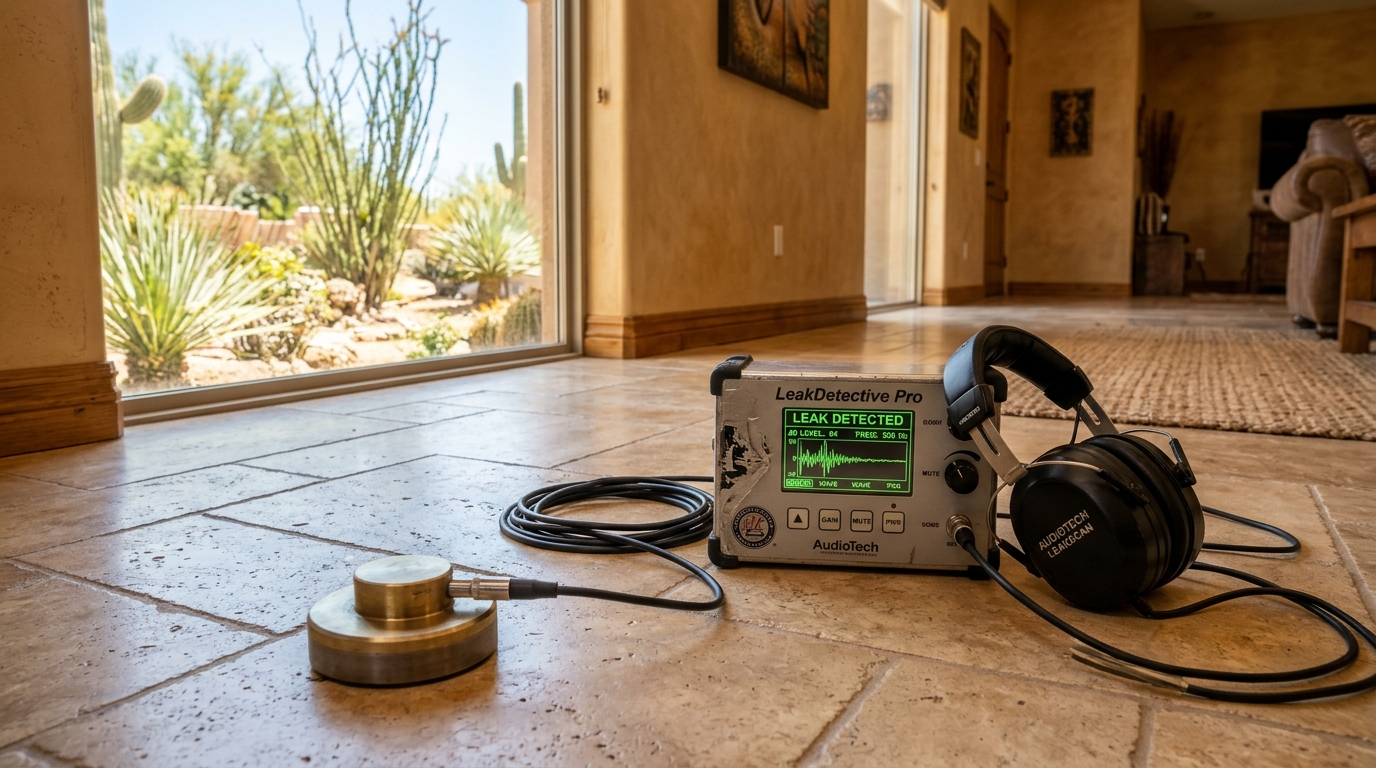
Immediate Action Step: If your water meter is spinning continuously while all fixtures are off, or if you feel a distinct warm patch on your floor, turn off your main water shutoff valve near the street or exterior hose bib, take photographs of any visible moisture or meter dials, and contact a professional immediately.
Why Slab Leaks Happen in Casa Grande, AZ
Local desert climate conditions, distinctive regional soil compositions, and groundwater chemistry combine to create unique plumbing vulnerabilities across Casa Grande.
Hard Water & Mineral Scale
Casa Grande municipal and local well water sources carry exceptionally high levels of dissolved calcium and magnesium minerals. Over years of thermal cycles, hard water creates aggressive scaling and pitting along the interior walls of buried copper lines, leading to recurring pinhole failures.
Learn about pinhole repair →Sandy & Caliche Soils
The ground across Casa Grande features sandy desert loam interspersed with dense, rock-hard caliche layers. When buried copper lines make direct contact with abrasive caliche aggregate without proper protective sleeving, ongoing thermal vibration rubs the soft copper until a puncture develops.
Explore pipe rerouting →Hot Water Line Expansion
Hot water lines expand and contract every time hot water flows toward a faucet or shower. Trapped beneath thousands of pounds of hardened concrete, this constant microscopic movement against gravel bedding causes friction wear, resulting in a leak under foundation Casa Grande.
Read about hot water leaks →Casa Grande Slab Leak Warning Signs Checklist
Homeowners often overlook early indicators of sub-slab pipe failure until structural damage occurs. Inspect your home for these verified symptoms.
Warm Spots on Floors
A noticeable warm patch on tile, laminate, or carpet flooring typically indicates a hot water line rupture discharging heated water directly against the bottom of the concrete slab.
Running Water Sounds
The faint sound of rushing, hissing, or bubbling water inside baseboards or beneath the floorboards when every toilet, faucet, and irrigation valve is tightly closed.
Spinning Water Meter
The low-flow indicator needle or digital consumption bar on your city water meter dial moves continuously even after you have verified no household appliances are running.
Unexplained High Utility Bills
Sudden spikes in monthly water utility bills, or unexpected surges in natural gas and electric bills caused by water heaters firing around the clock to heat escaping water.
Damp Flooring & Moisture
Discolored grout lines, dark spots on concrete, buckling baseboards, spongy carpets, or white efflorescence mineral crusts forming on garage or patio floor joints.
Musty Odors & Floor Cracks
Lingering mildew smells behind cupboards and baseboards, or hairline cracks spreading outward across living room tile or drywall corners from foundation movement.
Diagnostic & Repair Options for Foundation Leaks
Resolving an under-foundation leak requires selecting the right engineering approach based on pipe age, leak location, and foundation integrity.
Direct Concrete Spot Repair
When a pipe is young, in good general condition, and has suffered an isolated mechanical failure, opening a precise surgical window through the concrete slab allows technicians to replace the damaged copper section with silver-soldered fittings before sealing the slab.
Attic & Overhead Pipe Reroute
The preferred method for most Arizona slab homes. Rather than jackhammering finished flooring, the failing sub-slab line is abandoned in place and an entirely new, insulated PEX line is routed overhead through attic trusses and interior wall cavities.
View reroute details →Comprehensive Whole-House Repipe
If your home has experienced multiple recurring slab leaks or contains aged copper showing systemic thin-wall pitting, replacing all supply piping with modern cross-linked polyethylene (PEX) eliminates future foundation plumbing risks entirely.
Explore whole-house repiping →Understanding Slab Leak Repair Cost Factors: While every home is unique, key factors influencing your slab leak repair cost Casa Grande estimate include the depth of the slab, the exact location of the break, whether an attic reroute or concrete penetration is chosen, the type of replacement material installed, and necessary drywall access patching. Accurate acoustic location prevents unnecessary structural demolition.
Our 4-Step Slab Leak Resolution Process
From initial emergency isolation to final pressure certification, every project follows a rigorous technical workflow.
Electronic Isolation
We test line pressure across separate hot and cold zones to determine the exact failing loop without invasive guesswork.
Acoustic Location
Using ground microphones and high-frequency amplifiers, our technicians pinpoint the sound of water escaping under concrete.
Non-Invasive Strategy
We present the cleanest long-term solution—prioritizing clean overhead rerouting through attic spaces over tearing up floors.
Pressure Testing
Following repair or line rerouting, the entire plumbing network is pressure-tested to verify zero drops and complete integrity.
Comprehensive Plumbing Solutions in Casa Grande
Explore our full range of dedicated foundation and leak detection services tailored to Pinal County residences.
Slab Leak Detection
Pinpoint leaks under your foundation using acoustic listening discs, electromagnetic pipe tracing, and line pressure testing without destructive tearing.
Read detection guide →Hot Water Slab Leaks
Solve high gas bills, warm kitchen or hallway flooring tiles, and constant water heater firing caused by ruptured hot supply lines buried beneath concrete.
Hot water leak solutions →Slab Leak Reroutes
Bypass failed underground copper lines entirely with modern flexible PEX tubing routed cleanly through attic joists and interior wall framing.
Bypass pipe options →Whole-House Repiping
Replace deteriorating copper or defective polybutylene systems with durable, scale-resistant PEX-A pipe installed above the foundation slab.
Repiping information →Water Leak Detection
Track down hidden moisture behind bathroom drywall, inside ceiling cavities, under sinks, or along exterior main water supply yard lines.
Water leak services →Pinhole Leak Repair
Remediate localized copper pitting and microscopic water jets caused by hard water chemistry and high municipal flow velocity.
Pinhole leak repairs →Slab Leak Insurance Help
Understand how homeowners insurance policies handle access tear-out, water damage restoration, and written diagnostic leak reports.
Insurance documentation →Service Areas
Serving homeowners across Casa Grande including Mission Royale and Downtown Casa Grande, alongside nearby Arizona City and Eloy communities.
View service coverage →Schedule Service
Speak directly with an experienced plumbing professional to describe your home's symptoms and arrange precision electronic detection.
Contact our team →Frequently Asked Questions About Casa Grande Slab Leaks
Get straightforward answers regarding symptoms, repairs, and protecting your concrete foundation.
Can I ignore a minor slab leak if my water bill has only increased slightly?
No. Even a small pinhole leak under a concrete slab continuously releases hundreds of gallons of water each week. In Casa Grande, sandy desert soils and caliche subgrades can wash away or expand unevenly when saturated, undermining the structural stability of the foundation and causing significant cracking in tile and drywall.
Is jackhammering the floor the only way to fix a slab leak?
Not at all. In fact, cutting open concrete slabs is often our last choice. Overhead pipe rerouting allows plumbers to abandon the leaking underground line entirely and run new durable PEX lines through interior walls or attic cavities, preserving your expensive flooring and avoiding heavy interior dust.
Why do hot water lines develop leaks under the slab more frequently than cold lines?
Hot water lines endure continuous thermal expansion and contraction cycles as water heats and cools. Because copper pipes are encased in concrete or buried in coarse gravel bedding, this microscopic expansion causes the exterior copper to rub repeatedly against surrounding hard materials, eventually wearing thin spots.
Does homeowners insurance cover under-slab plumbing repairs in Arizona?
Most standard homeowners insurance policies in Arizona cover the cost of tearing out and accessing the concrete to reach the leak, as well as repairing resulting water damage to floors, drywall, and cabinets. However, the cost of repairing the plumbing pipe itself is typically the homeowner's responsibility. Check our slab leak insurance guide for details.
How do plumbers locate leaks buried under 4 to 6 inches of concrete?
Professional plumbers utilize sensitive acoustic ground microphones, thermal imaging cameras, and nitrogen pressure testing. These non-invasive tools detect the ultrasonic vibration and heat signature of escaping water, pinpointing the problem to within a couple square feet without breaking up the floor.